
Table of Contents
- Understanding Indoor Air Quality for Your Culver City Home
- Common Indoor Air Pollutants and Their Sources
- Recognizing Poor IAQ: Health Effects and How to Test
- Practical Steps to Improve Your Home’s Air Quality
- Advanced IAQ Solutions: Purifiers, Testing, and Installation
- Frequently Asked Questions About Indoor Air Quality
Understanding Indoor Air Quality for Your Culver City Home
Your HVAC system controls temperature, but it also plays a critical role in the air you breathe. Indoor air quality (IAQ) describes the condition of that air and its impact on your family’s health. Common pollutants such as dust mites, pet dander, mold spores, and volatile organic compounds can accumulate, and the U.S. Environmental Protection Agency warns that indoor air may be two to five times more polluted than outdoor air, causing eye and throat irritation, headaches, and respiratory issues.
For Culver City residents, the Los Angeles Basin environment presents unique challenges. Dry summers, persistent smog, and the city’s proximity to major freeways allow more outdoor pollutants—such as fine particulate matter—to infiltrate homes. These outdoor contaminants can worsen indoor air quality problems, especially when your HVAC system recirculates unfiltered air. Understanding how local climate and urban factors interact with your home’s ventilation is the first step toward better IAQ management.
Your HVAC system plays a critical role in filtering the air that circulates throughout your home. Adding an hvac air purifier installation can further reduce airborne contaminants, and an indoor air quality testing service gives you a clear picture of what’s in your air. With over 25 years of local experience, our team provides straightforward evaluations and tailored recommendations. For dependable guidance, rely on heating cooling climate control in Culver City. Contact us to schedule a professional IAQ assessment.
Common Indoor Air Pollutants and Their Sources
Now that we understand why indoor air quality matters, let’s look at the pollutants that commonly affect our homes. According to U.S. Environmental Protection Agency resources, the most common indoor air pollutants include particulate matter, volatile organic compounds (VOCs), carbon monoxide, radon, and biological contaminants. Each poses unique risks to health and comfort.
The table below summarizes these pollutants along with their typical sources, health effects, and recommended control strategies.
| Pollutant | Common Sources | Health Effects | Control Strategy |
|---|---|---|---|
| Particulate Matter (PM) | Dust, pollen, pet dander, smoke | Respiratory irritation, allergies, asthma attacks | High-MERV filters, air purifiers, regular cleaning |
| Volatile Organic Compounds (VOCs) | Paints, cleaning products, air fresheners, new furniture | Headaches, dizziness, long-term organ damage | Source control, increased ventilation, carbon filtration |
| Carbon Monoxide (CO) | Unvented gas appliances, attached garages, furnaces | Dizziness, confusion, fatal at high levels | CO detectors, proper venting, annual HVAC inspections |
| Radon | Soil, groundwater, building materials | Lung cancer (second leading cause) | Professional radon testing and mitigation systems |
| Biological Contaminants | Mold, mildew, dust mites, bacteria, viruses | Allergic reactions, asthma, infectious diseases | Humidity control (30-50%), HEPA filters, UV-C lights |
Beyond the common pollutants listed above, radon and biological contaminants like mold and bacteria require special attention. Radon, a colorless and odorless gas, is the second leading cause of lung cancer according to the EPA. It enters homes through soil and groundwater, making professional radon testing essential—a service we can coordinate for homeowners in Culver City and the surrounding Los Angeles area. Biological contaminants, including mold spores and viruses, thrive in humid conditions and can trigger allergies and asthma. Controlling humidity levels between 30% and 50%, as recommended by the U.S. Department of Energy for energy-efficient ventilation, is critical in preventing their spread.
Fortunately, effective control strategies exist for each pollutant. For particulate matter, high-MERV filters and regular cleaning dramatically reduce airborne dust and allergens. VOC levels can be lowered through source control—opting for low-VOC products—and enhanced ventilation. Carbon monoxide risks are mitigated by installing CO detectors and scheduling annual HVAC inspections with our highly-trained technicians. One of the most impactful steps is investing in an HVAC air purifier installation, which integrates whole-home filtration into your central system. For homeowners concerned about hidden threats, our indoor air quality testing service in the Los Angeles area provides a comprehensive assessment, identifying pollutants and recommending tailored solutions. We also support routine AC maintenance and filter replacement programs to sustain cleaner air over the long term. The U.S. Department of Energy emphasizes that proper ventilation reduces pollutant buildup while preserving energy efficiency, a principle we apply to every system we service.
Knowing the sources of these pollutants is the first step toward a healthier home. Next, we’ll explore how our HVAC air purifier installation and indoor air quality testing services can help eliminate them and keep your air clean year-round.
Recognizing Poor IAQ: Health Effects and How to Test
Poor indoor air quality in your Culver City home can affect your health more than you think — and the symptoms are not always obvious. From short-term irritation to long-term respiratory and cardiovascular conditions, the air you breathe indoors plays a critical role in your family’s well-being. Understanding these health effects is the first step toward creating a safer and more comfortable home environment.
The following comparison table provides a quick-reference overview of how poor IAQ impacts health across different categories, timeframes, and populations.
| Health Category | Symptoms | Typical Timeframe | Affected Populations |
|---|---|---|---|
| Short-Term Irritation | Eye, nose, and throat irritation; headaches; dizziness; fatigue | Immediate to hours | General population, especially sensitive individuals |
| Allergic Reactions | Sneezing, coughing, watery eyes, runny nose | Minutes to days | People with allergies or asthma |
| Respiratory Conditions | Asthma onset or worsening, chronic bronchitis, COPD | Months to years | Children, elderly, people with pre-existing conditions |
| Cardiovascular Issues | Heart palpitations, increased blood pressure | Years of chronic exposure | Adults over 50, those with heart disease |
Short-Term and Long-Term Health Effects
Short-term exposure to airborne contaminants often mimics common colds or seasonal allergies, which is why many homeowners overlook the connection to their indoor environment. According to the U.S. Environmental Protection Agency, immediate symptoms include eye, nose, and throat irritation, headaches, dizziness, and unusual fatigue that clears up after leaving the affected space. These reactions can occur within hours of exposure and may affect anyone — though individuals with chemical sensitivities or compromised immune systems often experience them more intensely.
Allergic reactions triggered by poor indoor air quality present as persistent sneezing, coughing, watery eyes, and runny nose symptoms. For the millions of people who already manage seasonal allergies or asthma, elevated levels of indoor particulates or biological contaminants can turn a manageable condition into a daily struggle. Government health data indicates that these reactions can develop within minutes or persist for days, depending on the type and concentration of allergens present.
Long-term exposure represents the more serious side of air quality issues. Chronic respiratory conditions, including asthma onset or worsening and chronic bronchitis, have been linked to prolonged contact with fine particulate matter and volatile organic compounds (VOCs). The EPA identifies children, the elderly, and people with pre-existing respiratory conditions as the most vulnerable populations for these sustained health impacts. Over the course of months to years, what might have started as a mild cough can progressively deteriorate lung function.
Cardiovascular effects from poor indoor air quality typically emerge only after years of chronic exposure — but they can be among the most severe. Industry research has documented links between sustained exposure to fine particulates and increased blood pressure, heart palpitations, and a higher incidence of cardiovascular events. Adults over 50 and those with existing heart conditions should pay particular attention to the air circulating in their homes throughout the day and night.
The cumulative nature of these long-term effects underscores why proactive IAQ management matters. When your family spends the majority of each day indoors, the quality of that air directly influences long-term health outcomes that extend far beyond seasonal discomfort.
Measuring Your Indoor Air Quality
Identifying poor IAQ begins with understanding what to measure and how. Professional indoor air quality assessment offers the most comprehensive approach — our highly-trained technicians use established procedures to evaluate humidity levels, carbon dioxide (CO₂) concentrations, volatile organic compounds (VOCs), and particulate matter counts throughout your home. These assessments follow ASHRAE HVAC standards and resources to ensure accurate measurement of contaminants and airflow, giving you a clear picture of which pollutants may be affecting your family.
An indoor air quality testing service provides the diagnostic baseline that helps homeowners understand whether their symptoms connect to airborne irritants or other environmental factors. Our team examines multiple indicators simultaneously because real-world air quality issues often involve overlapping contaminant sources — and a single measurement rarely tells the full story. We approach every assessment with a customer-focused methodology that prioritizes thorough documentation and clear explanations of what the readings mean for your home.
For ongoing monitoring between professional assessments, many Culver City homeowners find value in do-it-yourself monitors that track PM2.5 particulates, temperature, and humidity in real time. These consumer-grade devices serve as a useful complement to professional testing — they can alert you to sudden changes or persistent patterns that warrant further investigation — but they are not a replacement for the precision and scope of technician-led evaluations. Think of DIY monitors as an early-warning system rather than a diagnostic tool.
Key indicators to watch for include consistently elevated humidity above 60 percent, which encourages mold growth; CO₂ readings that climb noticeably when rooms are occupied, suggesting inadequate ventilation; and visible dust accumulation that returns quickly after cleaning. If you notice these signs or if family members experience symptoms that ease when they leave the house, testing your home’s air quality in the Los Angeles area becomes an important step toward identifying the root cause.
When you are ready to address indoor air quality concerns, hvac air purifier installation can target the specific contaminants identified during testing — integrating seamlessly with your existing heating and cooling system to deliver cleaner air throughout your home. Once you recognize the signs and measure your indoor air, we can help you breathe easier with expert IAQ solutions designed around the unique characteristics of your Culver City living space.
Practical Steps to Improve Your Home’s Air Quality
With a clear understanding of the health and comfort risks linked to poor indoor air quality, you can take proactive measures to create a cleaner, healthier living environment. The following steps move from simple, low-cost actions to professional solutions, building a comprehensive approach that suits your home and budget.
Source Control and Ventilation
Reducing pollutants at the source is the most effective way to improve indoor air quality. The U.S. Environmental Protection Agency identifies common triggers such as volatile organic compounds (VOCs), mold, and dust mites. Start by adopting a shoe-free policy indoors and prohibiting smoking inside your home. Use exhaust fans in the kitchen and bathroom to remove moisture and cooking fumes, and store paints, cleaners, and solvents in tightly sealed containers—preferably in a detached garage or shed. For a quick air refresh, open windows for 5 to 10 minutes each day, even in cooler months, to dilute accumulated contaminants. These small habits require no special equipment and can dramatically lower the concentration of airborne irritants in your daily living space.
HVAC Maintenance and Filter Upgrades
Your heating and cooling system can be a powerful ally or a hidden source of trouble. Change standard 1-inch filters at least every 90 days, or monthly if you have pets or allergies. Upgrading to a pleated filter with a MERV rating between 8 and 13 captures more pollen, dander, and microscopic particles. According to the U.S. Department of Energy, selecting a filter in that range improves particle removal without unnecessarily restricting airflow—provided your system was designed for that level of resistance. We recommend pairing a filter upgrade with annual professional maintenance; a trained technician will inspect the blower, coils, and duct seals, ensuring your HVAC runs efficiently while actively filtering the air throughout your home.
When to Call a Professional
Sometimes do-it-yourself steps aren’t enough. Unexplained allergy symptoms that persist indoors, visible mold growth, a musty smell after rain, dust from a renovation project, or flooding are strong signals that a deeper problem exists. In these cases, scheduling an indoor air quality testing service can pinpoint hidden contaminants. If you’re considering whole-home purification, our team provides expert hvac air purifier installation for families in Culver City and the surrounding Los Angeles area. Contact us to learn about our indoor air quality testing service and HVAC air purifier installation options—we’ll help you choose a solution that fits your needs and restores clean, comfortable air inside your home.
The table below compares common indoor air quality improvement methods across cost, effectiveness, effort, and best use cases.
| Method | Cost | Effectiveness | Required Effort | Best For |
|---|---|---|---|---|
| Source Control | Low (free to minimal) | High (eliminates the problem) | Low (e.g., remove shoes, no smoking) | Reducing VOCs, dust, and biological contaminants |
| Improved Ventilation | Low to Moderate | Moderate (dilutes pollutants) | Low (open windows, run bathroom fans) | General air exchange, reducing CO2, VOCs |
| HVAC Filter Upgrade | Moderate ($10–$30/filter) | High (captures PM, allergens) | Low (swap filter quarterly) | Catching airborne particles system-wide |
| Whole-Home Air Purifier | High ($1,000–$2,500 installed) | Very High (treats all conditioned air) | Moderate (professional install, annual maintenance) | Comprehensive IAQ improvement for whole home |
| Professional Testing & Cleaning | Moderate to High | Very High (targeted problem resolution) | None (handled by professionals) | Diagnosing specific IAQ issues, duct cleaning |
For persistent issues or whole-home solutions, our team at Culver City Heating & Cooling is ready to help.
Advanced IAQ Solutions: Purifiers, Testing, and Installation
Once you understand your indoor air quality challenges, the next step is exploring advanced solutions. While regular ventilation helps, targeted purification systems dig deeper, capturing and neutralizing the specific pollutants affecting your home’s comfort and health. Modern air cleaning equipment offers options for every living space and lifestyle.
Whole-home air purifiers integrate directly with your existing ductwork to filter air throughout every room. As indicated by ASHRAE standards, these systems treat all air moving through the HVAC system, capturing dust, pollen, and mold spores. Proper hvac air purifier installation ensures the unit is correctly sized and connected, maximizing filtration without reducing airflow.
In contrast, portable air purifiers are self-contained units that clean air in a single room, typically covering 200–500 square feet. They require no installation—just plug in and use—but only treat the air in the immediate space. These units commonly use HEPA or activated carbon filters to reduce specific pollutants, making them ideal for target areas like bedrooms or home offices.
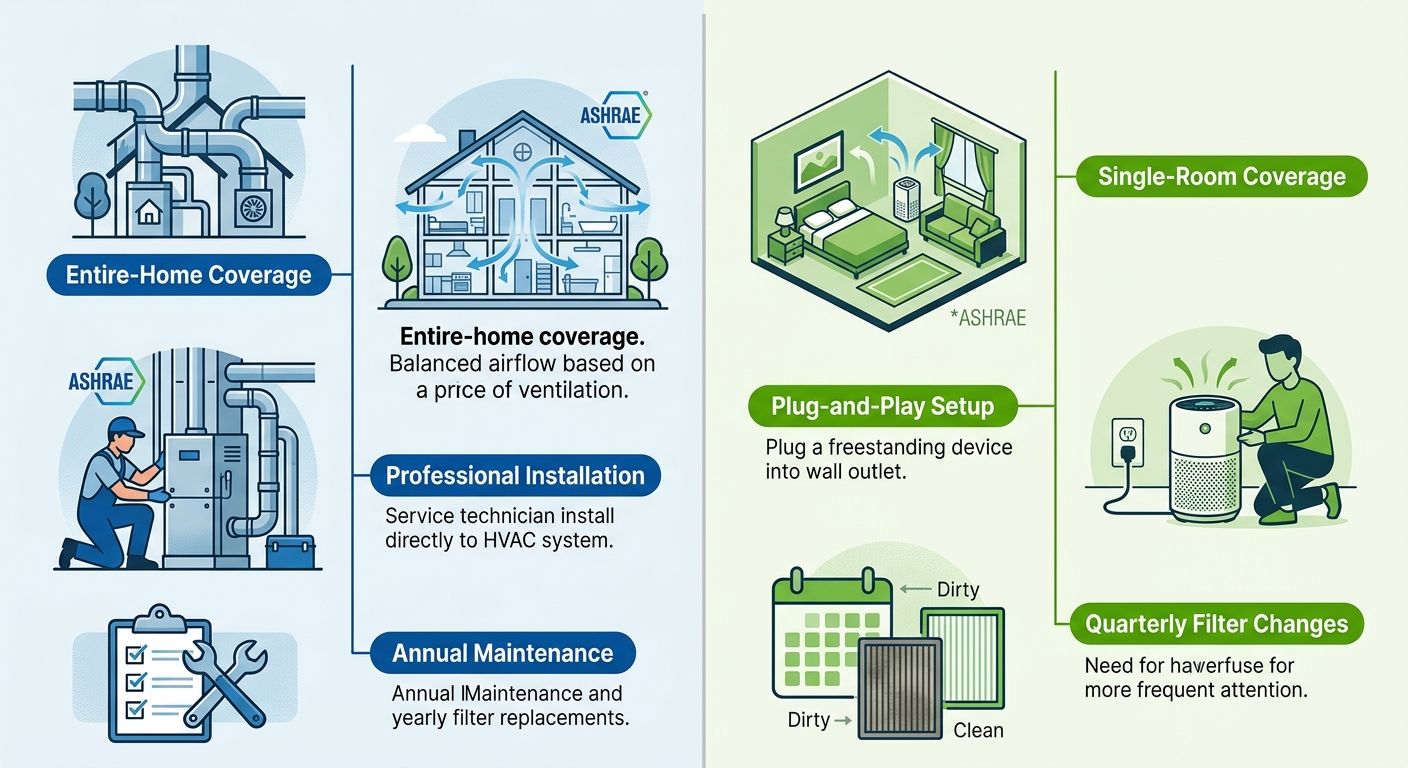 Whole-home vs portable air purifier comparison
Before choosing any system, professional indoor air quality testing service can pinpoint the exact pollutants affecting your home. Our indoor air quality assessment measures allergens, VOCs, mold spores, and particulate matter, giving you a clear picture of what you are breathing. With that data, we can recommend a purifier that targets your specific concerns—not a one-size-fits-all solution.
Proper installation is critical—even the highest-quality purifier underperforms if not integrated correctly. When you choose our certified technicians, we verify compatibility with your HVAC system, seal duct connections, and calibrate controls according to manufacturer instructions and ASHRAE guidelines. This attention to detail optimizes performance, protects system warranties, and ensures long-term reliability.
The following table summarizes the key differences between whole-home and portable air purification systems.
| Feature | Whole-Home Air Purifier | Portable Air Purifier |
|---|---|---|
| Coverage Area | Entire home (ties into existing ductwork) | Single room (typically 200–500 sq ft) |
| Installation | Requires professional HVAC integration | No installation (plug-and-play) |
| Filtration Technology | HEPA, UV-C, or electronic (installed in duct) | HEPA, activated carbon, ionizer (standalone unit) |
| Maintenance | Annual filter changes (tied to HVAC schedule) | Quarterly filter replacements |
| Cost | Higher upfront cost ($1,000–$2,500 installed) | Lower upfront cost ($100–$800 per unit) |
| Effectiveness | Treats all air moving through HVAC system | Treats only the room it is placed in |
From whole-home purifiers to portable units and professional testing, the right combination can dramatically improve your indoor environment. At heating cooling climate control in Culver City, we combine years of HVAC expertise with advanced IAQ solutions to create healthier homes. Contact us today to schedule an air quality assessment and discover the purification strategy that fits your family’s needs.
Frequently Asked Questions About Indoor Air Quality
Many homeowners have questions about maintaining healthy air. Here we answer the most common ones.
How can we tell if our home has poor indoor air quality?
According to the U.S. Environmental Protection Agency, signs of poor home air quality include visible dust accumulation, persistent odors, humidity issues, and allergy-like symptoms that affect your family’s comfort.
What are effective ways to improve home air quality?
We recommend upgrading HVAC filters, scheduling regular AC maintenance, and installing a whole-home air purifier. Our team in Culver City can perform hvac air purifier installation to capture dust and allergens.
Is indoor air quality testing necessary?
Professional indoor air quality testing service can identify hidden pollutants such as mold spores and volatile organic compounds, especially in older homes or after renovations, helping you make informed decisions for your family’s health.
Trademarks remain owned by their respective owners. Brand names are referenced for identification purposes only and do not imply endorsement or affiliation.