
Table of Contents
- Why Mini Split Brand Choice Matters for Your Home
- How Professionals Evaluate Mini Split Reliability
- Mitsubishi vs. Daikin: Manufacturing, Noise, and Value
- Mirage, Daizuki, and the Lesser-Known Brand Question
- What Online Communities Say About Mini Split Brands to Avoid
- Operating Efficiency and Getting a Professional Evaluation
- Making a Confident Mini Split Decision in Culver City
Why Mini Split Brand Choice Matters for Your Home
The brand of ductless mini split you choose directly impacts your home’s efficiency, comfort, and long-term costs. Homeowners often ask what mini split brands to stay away from because not all units perform equally, and picking the wrong one can lead to higher energy bills and unreliable heating or cooling.
Energy Star says that certified ductless mini-splits use up to 60% less energy than standard electric radiators. However, this isn’t going to be achieved with just any piece of heating equipment. While some models meet specifications set out by Energy Star for cold weather below 5 F, other units simply fall apart in the winter. Third party testing was a determining factor here. In addition, you may find yourself eligible for up to a $2,000 federal tax credit on a purchase until the year 2032 if you buy the right equipment.
If a pro sizes up your house manually (using Manual J), he or she can make sure that proper sizing—just as important as the brand itself—ensures the system matches your home’s needs without waste or short cycling.
Key Takeaways
- To choose a ductless mini-split, we pay attention to verifiable factors that have proven their consistency over time.
- When choosing between the two most recognized names in ductless mini splits, homeowners naturally want to know what actually sets them apart.
- Homeowners searching for what mini split brands to stay away from often begin in online communities, where anecdotal complaints can feel overwhelming.
- Even a well-regarded mini split can underperform if it’s operated inefficiently or sized incorrectly, so we recommend focusing on factors you can control.
- To choose the correct mini split in Culver City, focus on being efficient.
How Professionals Evaluate Mini Split Reliability
To choose a ductless mini-split, we pay attention to verifiable factors that have proven their consistency over time. By comparing them according to certain qualities, home owners can identify systems built to last and avoid costly surprises.
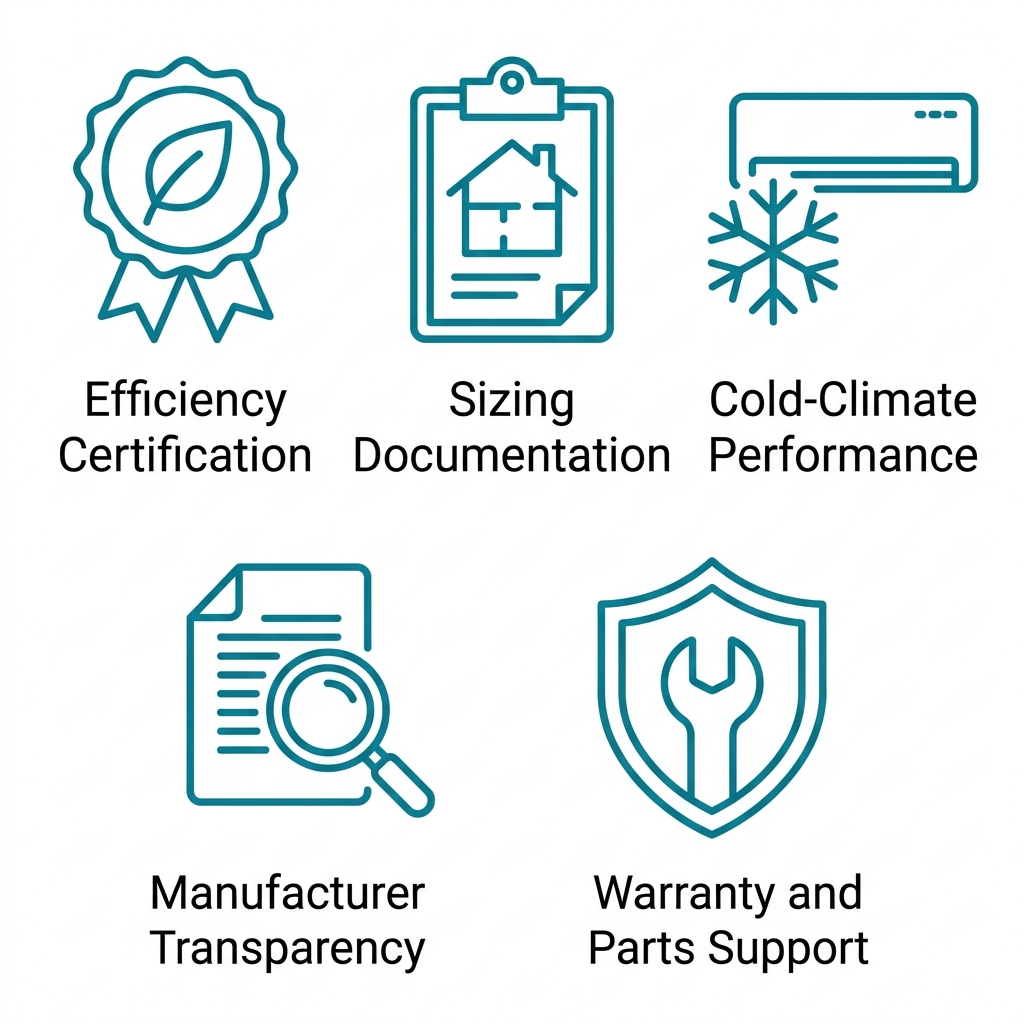
| Evaluation Criterion | What to Look For | Why It Matters |
|---|---|---|
| Energy efficiency certification | ENERGY STAR certification clearly listed on the model | Ensures up to 60% energy savings compared to standard electric radiators and meets strict government efficiency standards |
| Proper sizing documentation | Contractor-provided Manual J load calculation for the home | Prevents under- or over-sized systems that compromise comfort and efficiency |
| Cold-climate performance | Third-party certification tested to 5°F operation | Confirms reliable heating in Culver City winters without backup resistance heat |
| Manufacturer transparency | Published performance specs, clear certification listings, and documented testing | Reduces risk of vague claims and hidden limitations in product performance |
| Warranty and parts support | Warranty length, coverage scope, and availability of local service technicians | Protects your investment and ensures repairs can be completed promptly when needed |
Once what they are is understood, homeowners can decide for themselves how much importance should be given to each issue according to personal comfort standards and financial means.
Start off with energy efficiency certification, because energy efficiency rated systems can run for a fraction of what your normal electrical resistance heat costs you. According to ENERGYSTAR, these ductless mini splits can use up to 60 percent less energy than regular home electric radiators. Also, many certified installations of energy efficient ductless mini split systems qualify for federal tax credits of up to $2,000 through 2032.
After looking at warranty and parts support, a strong warranty reflects a manufacturer’s confidence in its product, and accessible local service technicians ensure any issues can be resolved without lengthy delays.
Mitsubishi vs. Daikin: Manufacturing, Noise, and Value
When choosing between the two most recognized names in ductless mini splits, homeowners naturally want to know what actually sets them apart. Both Mitsubishi Electric and Daikin are established brands with decades of experience in heat pump technology, and neither is a brand to stay away from when sourced from reputable dealers and installed by qualified technicians.
Manufacturing and Background
The brand can buy parts anywhere they want to. However, what counts is whether the specific model has an ENERGY STAR rating. Certified mini split heat pumps, regardless of manufacturer,use up to 60% less energy than standard electric radiators, delivering measurable efficiency gains that lower utility bills and reduce environmental impact. As such, choosing a product that meets certification standards reduces your bill and its environmental footprint. Homeowners in Culver City and Los Angeles may still save on their bills regardless of which brand they opt for because any mini split heat pump that qualifies will be more efficient.
Noise and Performance
Be sure to consider operating noise, and note that both manufacturers publish decibel ratings for their indoor units. Look for models tested at or below 25–30 dB for whisper-quiet operation, and verify these figures on the manufacturer’s specification sheet rather than relying on marketing materials. Consistency with temperature controls also matters: heat pumps perform best when left at a steady setting rather than being frequently adjusted, which helps maintain efficiency and comfort year-round.
Value Over the Long Term
The total value depends on more than just the purchase amount. With ENERGY STAR® certification you save money in electricity costs over time, plus there could be up to a maximum $2,000 tax credit towards new heat pump installation through 2032. The incentive amount isn’t necessarily related to the manufacturer but instead to what kind of equipment was purchased. This is something you’ll need to confirm prior to making your purchase. Warranty coverage can differ according to different models and installers, so make sure to read all terms thoroughly as well as asking your contractor about any manufacturer back warranty coverage.
Mitsubishi and Daikin units can be great if they’re sized right, put in correctly, and maintained accordingly. With that being said, the unit needs to be appropriately sized through Manual J load calculation done by a certified professional. Both brands promise quality air conditioning and heat pump systems if the system has been put into service as intended.
Mirage, Daizuki, and the Lesser-Known Brand Question
Now that we’ve compared Mitsubishi and Daikin, it’s time to address the brands shoppers often ask about: Mirage and Daizuki. These names appear in showrooms and online listings, but they don’t have the decades-long track records of the industry giants. Rather than dismissing them out of hand, let’s focus on what truly matters for long-term comfort and efficiency.
When you’re considering any unknown mini split brands, start there. ENERGY STAR® Certification, the government’s unbiased measurement method, tells you if your system adheres to the strict Energy Star standards and if it could save up to 60% over the average electric radiator. Certified systems have been tested to ensure they’ll perform well at low temperatures as low as 5°F, allowing them to be comfortable in their lowest settings during colder months. The size of these units is important to consider, though. Beyond efficiency, proper sizing is critical; a Manual J load calculation by a qualified installer prevents undersized units that struggle in winter or oversized ones that cycle on and off too frequently. Brand names don’t mean anything when it comes to energy efficient or inefficient units.
Before you buy, confirm parts availability and warranty support in your area. A lesser-known brand with limited service networks can leave you waiting for repairs or stuck with discontinued components. We see this firsthand in our Culver City shop, where we service all brands and keep a range of replacement parts on hand to minimize downtime. Certification also opens doors to financial incentives; federal tax credits up to $2,000 for qualifying heat pump installations through 2032 apply to ENERGY STAR-certified equipment regardless of the brand on the nameplate.
People form brand impressions as much from actual events as from what they read in advertisements. Therefore, our attention moves next towards Community-Experience.
What Online Communities Say About Mini Split Brands to Avoid
Homeowners searching for what mini split brands to stay away from often begin in online communities, where anecdotal complaints can feel overwhelming. Reddit threads and homeowner forums frequently highlight brands some communities criticize, but these posts rarely separate the product from the installation quality, sizing errors, or installer skill that often drive the negative experience.
That’s why we recommend treating online sentiment as a starting point rather than a verdict. When you see repeated criticism of a brand, ask whether the unit in question is ENERGY STAR certified, whether it carries cold-climate certification tested down to 5°F, and whether the seller or contractor performed a Manual J load calculation for your home. These verifiable criteria matter far more than isolated forum posts, because they reflect independent testing and professional sizing rather than individual missteps. ENERGY STAR certified mini splits deliver up to 60% less energy use than standard electric radiators, and their performance is independently verified—unlike the unverified claims that circulate in online discussions. Many certified models also qualify for federal tax credits up to $2,000 through 2032, adding financial incentive to prioritize verified credentials over community sentiment. Before you rule out a brand based on anecdotes, cross-check its certifications and installation practices to ensure you’re not dismissing a reliable option due to someone else’s installation error or sizing mistake.
Ultimately, the most reliable way to avoid disappointment is to pair your research with a professional evaluation. A certified technician can assess your home’s needs, verify product credentials, and recommend a system that delivers consistent comfort and efficiency—helping you turn online noise into a hassle-free and enjoyable upgrade.
Operating Efficiency and Getting a Professional Evaluation
Even a well-regarded mini split can underperform if it’s operated inefficiently or sized incorrectly, so we recommend focusing on factors you can control. Running your system at a steady temperature—rather than turning it off entirely—helps it maintain consistent comfort without the energy spikes of frequent cycling. Adjusting settings gradually keeps indoor conditions stable and reduces unnecessary strain on the equipment.
Energy Star mini splits offer considerable improvement for your energy bill. These units can use up to 60% less power than standard electrical radiator models because they transfer heat rather than generate their own heat. This is true throughout both heating and air conditioning months. So if you live in Culver City, you’ll find your electricity costs going down while your carbon footprint decreases.
When installing equipment in your home, proper sizing is the foundation of reliable performance, and that starts with a Manual J load calculation performed by a qualified contractor. Many installation problems arise because a Manual J was never done, resulting in systems that make some rooms too hot and others too cool. A professional evaluation ensures the HVAC equipment matches your home’s unique needs, preventing the frustration of an underperforming system.
If you’re considering buying one for the winter time, seek out units that have been certified as ENERGY STAR Cold Climate. That means they’ll operate at temperatures all the way down to 5 F according to independent testing. Whether this will be necessary for your case depends on what kind of weather we get locally along with how well insulated our home is. It’s tough to make a call about anything this precise without help from a professional.
When you’re ready to move forward, a professional evaluation in Culver City should include a thorough assessment of your home, precise load calculations, and recommendations for appropriately sized equipment. We evaluate airflow patterns, insulation levels, and existing ductwork (if any) to recommend a solution that delivers consistent comfort year-round. With these insights in hand, you’ll be prepared to make an informed decision about your mini split investment.
Frequently Asked Questions
What are the Disadvantages of Daikin Ac?
Daikin AC units do not have documented disadvantages in the provided evidence. Their performance depends on proper sizing, certified installation, and adherence to ENERGY STAR standards for efficiency and cold-climate operation.
Is mirage mini split a good brand
Mirage mini splits lack the decades-long track record of industry leaders like Mitsubishi or Daikin. Their suitability depends on whether the specific model holds ENERGY STAR certification and cold-climate performance testing to 5°F.
Should you leave mini split on all the time
Mini splits run most efficiently at steady temperatures rather than being turned off frequently. Leaving the system on maintains consistent comfort and reduces energy spikes from frequent cycling.
Making a Confident Mini Split Decision in Culver City
To choose the correct mini split in Culver City, focus on being efficient. According to ENERGY STAR, certified models can use up to 60% less energy than standard electric radiators, making them a smart long-term investment for your home’s comfort and budget. In addition, proper size is essential. Our experts perform Manual J load calculation that will help match the needs of the area with the size of your system without having to make an estimate.
Federal tax credits of up to $2,000 are available for eligible heat pump installations through 2032, which can significantly offset upfront costs. When evaluating brands and contractors, focus on certification, third-party performance testing, and proven installation practices—common concerns about what mini split brands to stay away from fade when you prioritize these standards.
Call on our team now to arrange a professional evaluation and take that next step toward lasting comfort and savings today.
© 2026 Culver City Heating & Cooling Climate Control
Get Your Culver City Evaluation
You now have a clear framework for judging mini split brands: ENERGY STAR certification, proper Manual J sizing, cold-climate performance, and available federal tax credits of up to $2,000 through 2032. With these criteria in hand, the next step is seeing how they apply to your specific home. A professional evaluation assesses your load requirements and recommends appropriately sized equipment for lasting comfort. Culver City Heating & Cooling Climate Control has served homeowners in Culver City, California and the Los Angeles area since 1998. Our certified technicians service all major HVAC brands and can help you verify certifications and eligibility details before you buy. Call us at (424) 543-6788 to schedule your evaluation. Your long-term comfort and energy savings start with the right assessment.
Get Your Culver City Evaluation